A website that collects enquiries
A marketing site with forms that send each enquiry straight to a specific mentor. Everyone has their own link to share, and the system remembers who brought a person in, even if they come back a week later.

A network of financial mentors that ran on spreadsheets, paper and group chats. In four months it got a website, a mobile app in both stores and an overview for the leadership. Today 59 people work in it every day, and we run the system.
Riaditeľstvo 1063 is our own project, not a client reference. It is, however, a production system on which we test every day the way of working we also use on projects for external companies: for the Riaditeľstvo 1053 network, our client, we built a website and a mobile app on the same foundation. Do you have a similar problem in your own company? We will build the solution around your processes →
Results were reported in group chats. Everyone tracked their own production in their own spreadsheet. New people learned the system by asking whoever brought them in. Nobody could say from one place who had worked this week and who had dropped off.
The answer was not another task tool. Those exist. The problem was that none of them knows how a network works: who sponsors whom, what a closing period is, why points are counted this way and not another. People either bent their work to fit the tool, or stopped opening it after two weeks.
So we did not buy. We built the system around the way the network actually works.
The website brings people in, the app guides them and the overview gives the leadership a picture. All on one foundation, so nothing is retyped by hand.
A marketing site with forms that send each enquiry straight to a specific mentor. Everyone has their own link to share, and the system remembers who brought a person in, even if they come back a week later.
Step-by-step onboarding for new people, a record of their own production, weekly reports, leaderboards and team messaging. iOS and Android from one codebase, so both versions get new features at the same time.
A view of the whole structure, approvals, closing periods and career progression. A leader can see from one place who worked this week and who needs a hand before they drop off completely.
The assistant answers people according to the network's procedures, not according to the internet. Members pay for the app monthly or yearly through both stores, so the system covers part of its own running costs.
Three screens from the app exactly as members of the network open it every day. No retouching, no design frames.
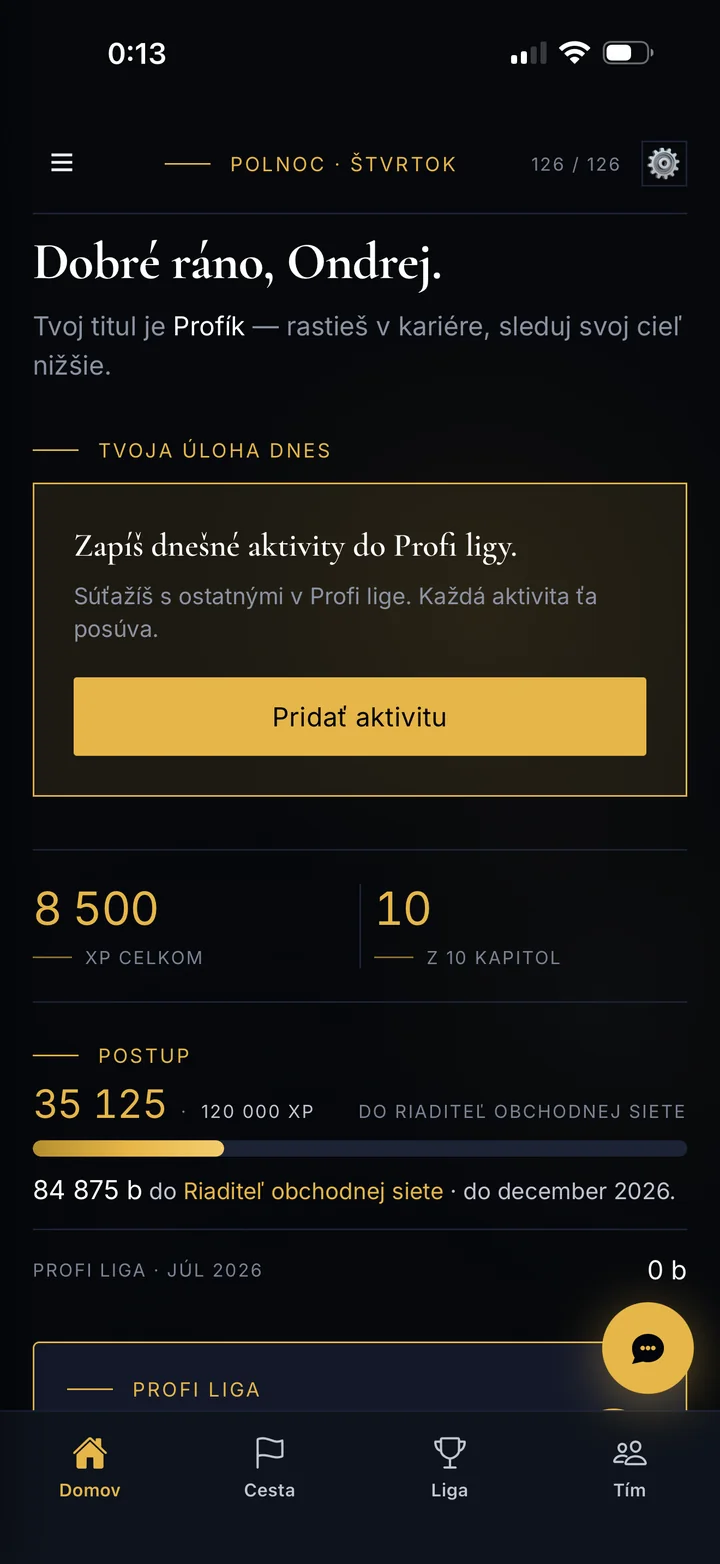
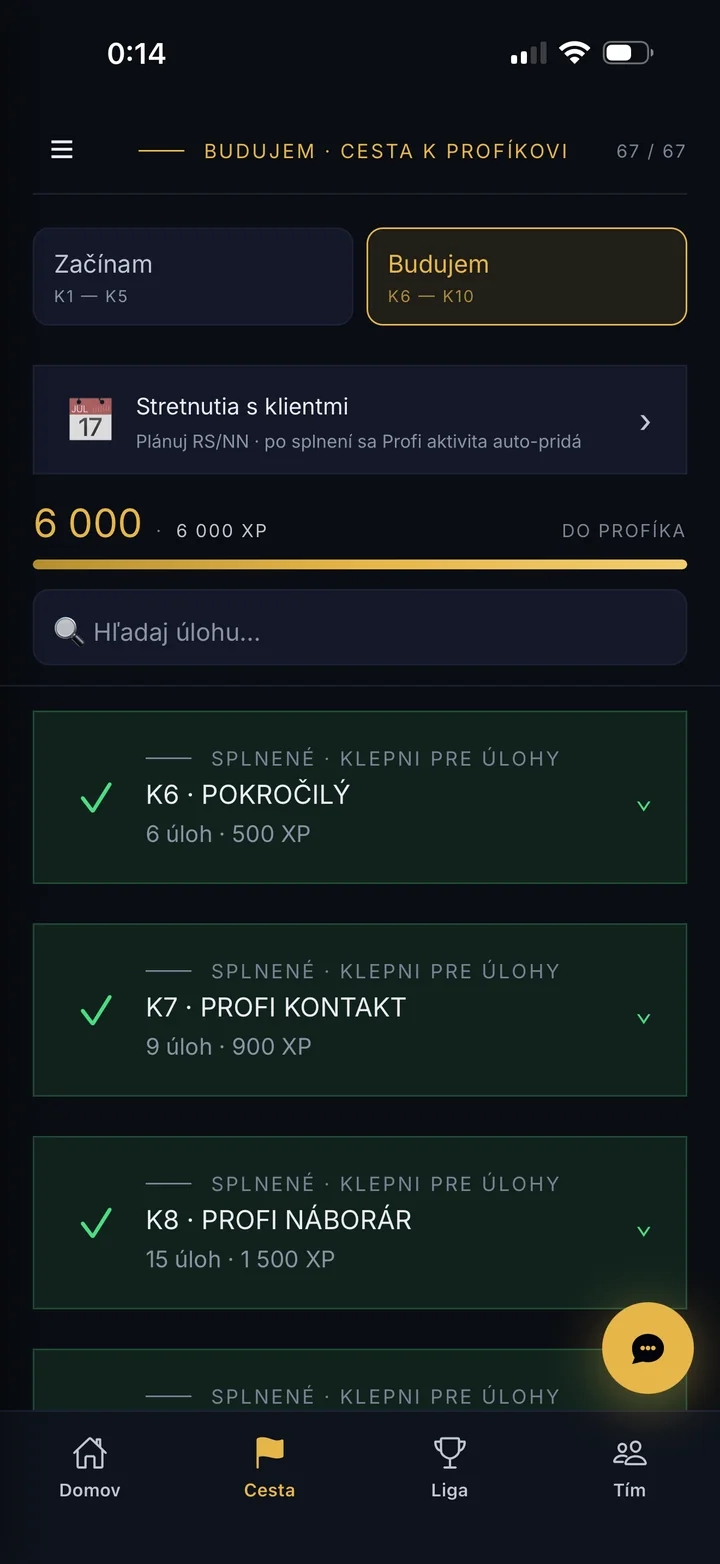
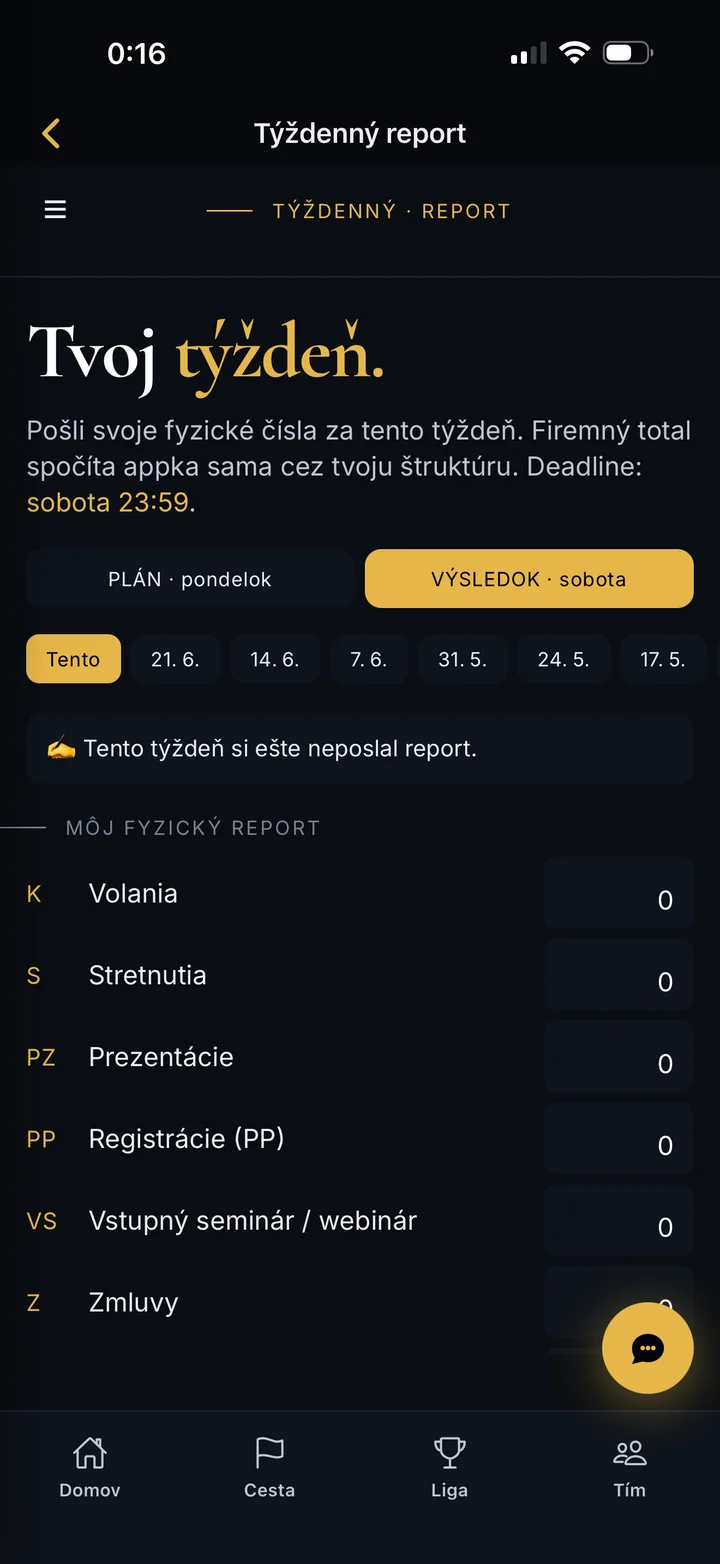
The real state of the system as of 31 August 2026.
Of 59 people, 27 opened the system in the last week, almost half. For an internal company tool that is a rare number. Most such tools go unused once the rollout is over.
We chose the tools to fit the problem: one codebase for both stores, everyone seeing only what they should, and new features reaching people without waiting for store approval.
We are not hiding it. It is the reason the system looks the way it does: we built it for people we know by name and we use it ourselves every day. When something is awkward, we hear about it at the next meeting.
The numbers above come from our own project, not from a third-party reference. Read them as proof that the product works and earns money, not as a testimonial from a happy customer.
The system runs on our servers, we watch it and we update it. Since launch in the summer of 2026, features have been added based on what people in the network asked for, not on what the original brief said. This is exactly how the monthly service works for other clients too.
We are building the same ecosystem for a second directorate right now. If you have people selling under you and you are holding it together with spreadsheets, we can build it for you too.